Thursday, 11 April 2013

The Latest Skin Cancer News

Here are some recent skin cancer headlines:

If your kids are very light skinned (not redheads) and they tan, they are at higher risk for developing more nevi (birthmarks, moles, colored skin spots) than kids who don't tan.  Why is this of concern?  Well the number and size of nevi are used for determining the risk of developing melanoma.  And in fact, numerous benign or atypical nevi are considered a strong risk factor for melanoma.  Researchers have concluded that UV tanning in non-redhead children with the lightest skin pigmentation promotes nevus development.  If this describes your child - avoid this risk by making sure they always use sun block and reapply it during the day.

The National Institute of Health has identified a new group of genetic mutations that are involved in melanoma.  Some of the newly identified mutations were found in nearly 20% or melanoma cases.  Better yet, there is a drug approved for certain types of breast cancer that target this gene.  The PTK family of genes contains many genes that when mutated, promote a variety of cancers (including certain breast cancers, melanoma).  Research will now continue to identify more drugs that directly battle these genetic mutations.

For a largely unknown reason, melanoma is much more common among women than men under age 40.  Between ages 40 to 50, the incidence is pretty similar for both groups.  Over age 50, the incidence of melanoma skews to men.  Researchers have recently reported that a specific genetic mutation leads to a nearly four-fold increase of melanoma in women under age 50.  The gene is called MDM2 and its activity is associated with estrogen, hence the disparity between men and women's incidence of melanoma in the below 50 age group.  The gene's risk impact may be even more profound than blistering sunburns, freckles and even a family history of melanoma.  If scientists could develop a genetic test to identify this specific gene mutation, then many pre-menopausal (younger) women would be aware of their risk.  That awareness could lead to close scrutiny, frequent skin evaluations by a dermatologist and early intervention and treatment, which is crucial to a positive outcome in this deadly disease.  Drugs could also be developed to target this gene mutation.  More than 62,000 people get diagnosed with melanoma yearly and over 8,000 patients die yearly.

Wednesday, 10 April 2013

Hair Transplant Surgery in Cosmetique Pakistan


Welcome To Cosmetique®

“Our goal is to be the Gold Standard of skin care and cosmetic surgery in South Asia. I personally see every new patient who visits our clinic. I am Board Certified by the American Board of Dermatology, American Board of Internal Medicine and American Academy of Cosmetic Surgery. These are exceptionally difficult degrees and fellowships to earn. These credentials attest & ensure that you, the patient, is in the best qualified hands. I returned to Pakistan after spending more than 15 years in training, teaching and practicing the art and science of Dermatology and Cosmetic Surgery at some of the finest institutions in the United States. My passion was to provide the same highest quality of services in Pakistan that we were used to provide in America. And, Alhamdulillah, we have been able to achieve that goal. The love and respect given to us by our ordinary patients as well as the Crème de la Crème of politics, sports, media, education & business of Pakistan and abroad, is very near and dear to our hearts at Cosmetique®. Most importantly, many highly acclaimed and top-notch doctors trust their and their family’s skincare and appearance enhancement with us. Being doctor’s doctor is not easy but is self rewarding. Rest assured that the trust and faith that you put in us will always be protected with our utmost efforts to provide you with the skin care and cosmetic surgery at par with the most advanced centers in the world. Please take a moment to explore our website. Our philosophy is simple…Doctor’s Qualifications Count and Quality Matters. After all, at Cosmetique®, our goal is to make you look good and feel confident with a beautiful YOU.” .....

A few words about hair transplant in Pakistan

Hair transplant in Pakistan have now become the most popular cosmetic surgery procedure for men. Many options to get the affordable hair transplant pakistan are available. From a totally non qualified wig-specialist to a barely qualified doctor to a very highly skilled cosmetic surgeon who specializes in hair transplant Pakistan there are many options to choose from. In Pakistan Hair transplant surgery is not strictly regulated by the government agencies, and can be performed by any non-qualified or a less qualified doctor as well, and thus the patients are advised to thoroughly check the credentials of the hair loss treatment specialist you are going choose as the hair transplant surgeon in Pakistan. The cost of hair transplant in Pakistan is considerably low as compared to any western country. Hair transplant is a small surgery in which hair is taken out from a patient's own back of the scalp (skin of the head) and planted on the front balding part of the head or on any part of the body where hair is needed. They are ones own natural hair and they grow for the rest of ones life as ones other normal hair. The transplanted hair requires cutting just like ones other normal hair.
At our exceptionally equipped clinic in Pakistan hair transplant is performed using our state-of-the-art technology and latest techniques of micro hair transplant surgery with single and follicular unit grafts, follicular unit extraction (FUE), body hair transplantation or a combination of these techniques as required by the patient. Local anesthesia is used to numb the skin and make the procedure absolutely painless. No hospitalization is required and the patient can resume his routine daily activities immediately after the transplantation. At Cosmetique Pakistan hair transplant is being performed using our latest equipment and all the medications used are of highest quality and imported from United States. The equipment used during the hair transplant surgery is of the most importance as this enhances the surgeons ability to perform the highest quality hair transplant.Surgery usually takes around 5-7 hours. We maintain the highest standards of patient safety, privacy and confidentiality.

What is Negroid hair (ebony hair)?

In African population the visible density is much more owing to curly hair. The shaft and roots are curly (banana shaped roots)
Figure 17 African hair follicles
Number of hair follicles is less per square cm, even then the density looks great owing to curliness.
So requirement of hair follicles is usually less to get good results.
The utmost care is mandatory during separation of hairs in this population. FUE technique leads to more damage to hair grafts (owing to curliness of hair, straight punches are more likely to cut the roots).
Still the recommended technique is strip method in african hairs.
Team has wide experience in negroid/ebony hair. Meticulous strip harvesting and meticulous root separation is required to save their curly roots.

Monday, 8 April 2013

Excessive Sweating Is a Treatable DiseaseExcessive Sweating Is a Treatable Disease

Excessive Sweating Is a Treatable Disease
The medical term used for the Excessive sweating is � Hyperhidrosis. Excessive sweating in armpits or on the palms and soles can pose a significant social problem as well as a real daily nuisance. It could be embarrassing to shake hands with sweaty palms, and sweaty feet can cause offensive odor in the feet. Excessive sweat in the armpits could be socially embarrassing leaving one with wet shirts and foul smell.
There are very effective and world class treatments for Excessive sweating available at Cosmetique® to help you put a lid on this smelly problem - Hyperhidrosis. First of all Dr Azim  will determine the cause of your excessive sweating. After Dr. Khan determines and confirms that you do not have any significant medical problem causing excessive sweating he will offer you the best treatment options in your particular situation. It may be a medication in the form of a lotion or spray that you may have to apply a few times a week on the sweaty areas, or the latest treatment called as Iontophoresis or a tiny injection of Botox®.
Q: What is Iontophoresis?
Iontophoresis is a special treatment for excessive sweating in the armpits, or on hands and feet. A computerized machine is used to generate very low voltage special waves through water and the affected area is placed on a wet surface on the machine. These special waves reduce the flow of excessive sweat from the affected area. You will need a series of treatments to bring excessive sweating to normal.
Q: Can Botox® be used for excessive sweating?
YES, Botox® is a very effective therapy for the treatment of excessive sweating (Hyperhidrosis). Botox injection stops the sweat glands from forming excessive sweat. It is simple, safe and minimally invasive treatment. The effect lasts for 3 to 14 months, varying from one patient to another. To learn more about other options to control excessive sweating make an appointment with Dr Azim at Cosmetique®.

Hair loss

Hair loss
Hair loss (alopecia) can affect just your scalp or your entire body. It can be the result of heredity, certain medications or an underlying medical condition. Anyone — men, women and children — can experience hair loss.
Baldness typically refers to excessive hair loss from your scalp. Some people prefer to let their baldness run its course untreated and unhidden. Others may cover it up with hairstyles, makeup, hats or scarves. And still others choose one of the medications or surgical procedures that are available to treat hair loss.
Before pursuing any treatment option, talk with your doctor about the cause of and best possible treatments for your particular type of hair loss.

Friday, 5 April 2013

What is body hair transplant?

The patients with advanced degree of hair loss with minimum donor hairs over scalp need not to get disappointed. The treatment option using hairs (usually taken by extraction techniques) from other parts of body has opened exciting opportunity for these desperate patients.
The possible donor areas are:-
Chest
Armpits/Axilla
Abdomen
Back
Beard
Forearm
Thighs/calves/legs.
Pubic area

Nowadays many patients want removal of unnecessary body hairs (with laser hair removal). In body hair transplant we reap dual benefits of removing unwanted body hairs and transferring them to bald areas over scalp, with no side effect or scaring over donor and recipient areas. While doing this an artistic mixing of body hairs and scalp hairs is achieved over recipient (bald) area to achieve natural appearance.

Thursday, 4 April 2013

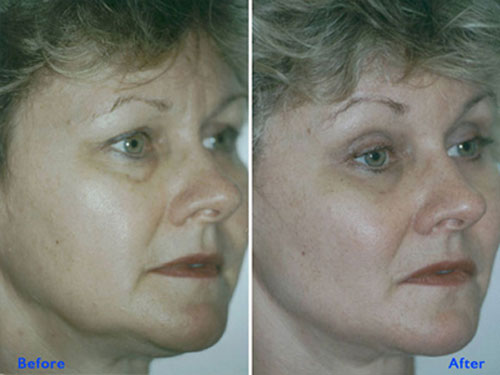
Face Lift without General Anesthesia

Face lift surgery is performed to pull the loose skin from the lower part of the face backwards and upwards, to give the face a youthful appearance, without a stretched ‘plastic’ look. The natural look after the face-lift surgery is something we specialize in. You don’t want to have a facelift done in a way that is detectable by others. In fact the face lift has to be subtle enough that no one should be able to notice the scars or be startled with a stretched look of your face.
We take pride in our doctors who have invented and refined many procedures performed by thousands of doctors throughout the world. One such technique is the face lift technique using only local anesthesia with minimal surgery. Two cutting edge medical papers of Dr. Azim
The official publication of American Society for Dermatologic Surgerywere honored to be published in the leading international medical journal Dermatologic Surgery – The official publication of American Society for Dermatologic Surgery (www.asds.net).

These papers are the testimony that we are the pioneers, Alhamdulillah, and perform the most refined minimally invasive face lift surgeries.

The surgery is performed in our out-patient surgery suite using only local anesthesia. General anesthesia has it’s own complications that can be avoided by just using the local anesthesia. The surgery takes between 1-2 hours and patient can immediately go home, and resume the routine activities in a day or two, and can go back to work within a few days.